

Content Management.
Practical writing on brand, growth and technology — and on the connections between them, which is where most of the value hides. No trend-chasing, no filler; frameworks and honest trade-offs, written by the team that does the work.

Git-Backed or API-Backed: Where Should Your Content Actually Live?
Both models publish a page. They differ in who can break production, how a change is versioned, and what happens the day you want to leave — and that is what should decide it.
Read
Headless CMS or Traditional: Which One Are You Actually Ready For?
Headless is a delivery decision, not a storage one. It buys front-end freedom and a second surface, and it charges you in preview, editing experience and front-end capacity you have to already have.
Read
What Happens to Your Content When You Leave the CMS?
Every CMS demo shows how content gets in. Almost none show how it gets out. Run the CMS migration export before you buy, because it decides whether leaving costs a week or a quarter.
Read
Structured Content: Fields That Survive the Next Redesign
A field earns its place by describing what something means, never how it looks. Model that way and the next redesign is a re-render. Model the other way and it is a retype.
Read
Who Can Refuse to Publish? Designing an Editorial Workflow With Real Gates
A workflow is not a set of statuses. It is the list of people and checks that can stop a page from going live, and most teams find they have notifications where they assumed they had gates.
Read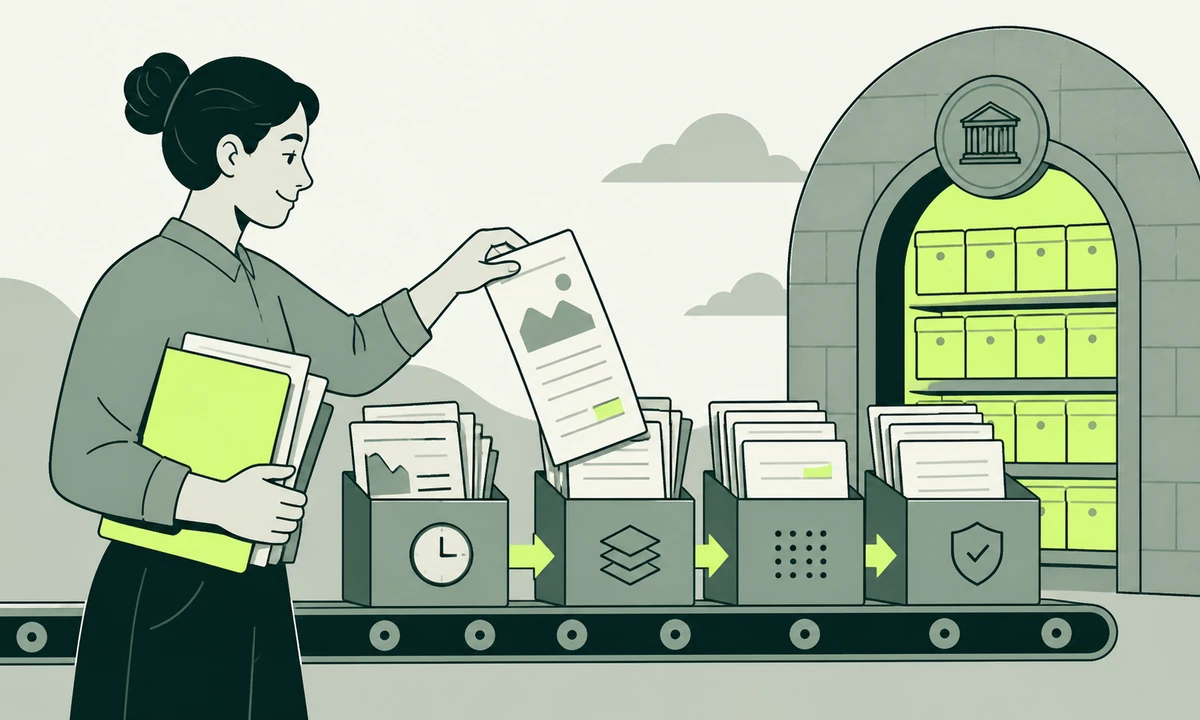
How Do You Migrate Ten Years of Pages Without Losing the Archive?
Most migration plans open by listing what to move. Open instead by deciding what to leave behind. The retire list, and the map that records it, are what hold an old archive together.
Read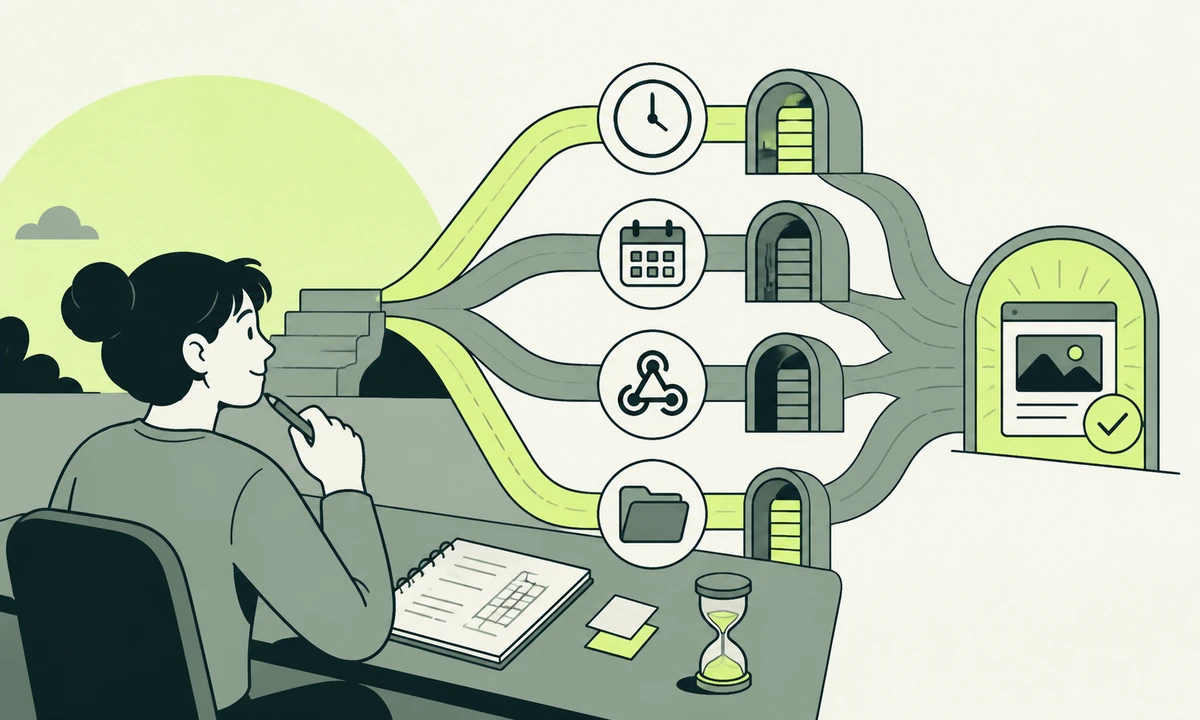
Scheduled Publishing on a Static Site: What Each Mechanism Guarantees
Scheduled publishing on a static site is a job, not a field. Four mechanisms are in common use, each promises something different, and the right one depends on how wrong a late publish would be.
Read
Preview, Draft, Publish: The Three States Every CMS Gets Wrong
Draft is a statement about permission, preview is a promise about rendering, publish is a commitment to a URL. Systems that treat them as one field with three values leak, and the preview link is where it shows.
Read
Content Modelling for Teams That Keep Adding Page Types
Every page type you add is a standing commitment: a template, a field set, a migration line and somebody who has to remember it exists. Most new types are variants that were never questioned.
Read
Version Control for Marketing Content: What Git Gives an Editor
Branch, diff, review, revert. Four ideas from software that solve four ordinary editorial problems, plus the two places the comparison stops being useful.
Read
Multi-Language Content Without a Second Website
A second website in a second language is two sites to maintain and two versions of the truth. Multilingual content management works when locales are structure inside one site: URLs, hreflang, fallbacks, one workflow.
Read
Why Does Your Content Team Keep Asking a Developer for Small Changes?
A content team that files a ticket for a headline change has one of four problems, and only one of them is the CMS. Here is how to tell them apart and what fixes each.
Read
Choosing a CMS: Twelve Questions That Separate the Shortlist
Feature matrices all agree. Vendors differ where it hurts, so ask the twelve questions in priority order and listen for the answer that should end the conversation before anyone signs.
Read
What a Content Workspace Should Do the Day After Launch
A launch is the beginning of the work, not the end of it. Content operations is what decides whether the system survives: publishing, refreshing, retiring and reporting, on a rhythm somebody owns.
Read
Why You Should Stop Storing Content as a Wall of HTML
The rich-text field is the cheapest shortcut in publishing and the most expensive one to keep. It fails at redesign, at syndication and at accessibility, and here is the way out.
Read15 articles in Content Management.
Rather talk it through
than read about it?
Every engagement starts with a conversation about where your business is going.